
David Kaplan: Indexicals, Demonstratives and the Shape of Context
“I”, “here” , “now” and formal semantics

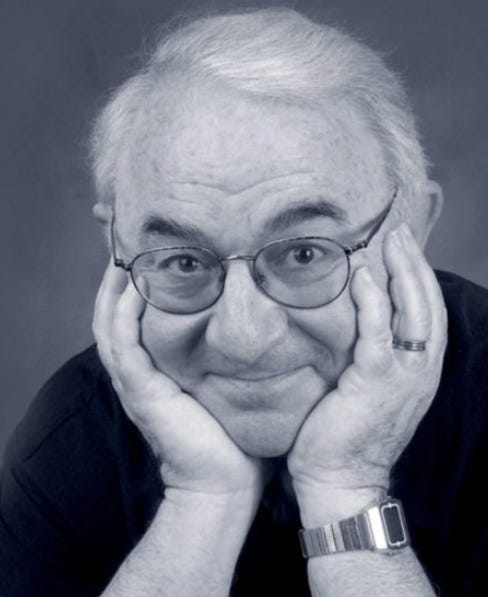
If you have followed your way through Popper, Carnap, Quine and Montague, Kaplan is the point where context moves from an afterthought to centre stage.

Carnap pushed semantics towards models, logical form and truth conditions.
Quine attacked stable analytic meanings and neat translation.
Montague showed how to treat fragments of English with the tools of modal logic and model theory.


Kaplan keeps the Montague machinery, but asks what happens to expressions that clearly depend on who is speaking, when, and where. For linguistics, that means: can you keep a truth-conditional, compositional semantics once you bring in person, space, time and pointing, or does context break the system. Kaplan’s answer is that you can keep it, but you must formalise context itself.
The problem: “I am here now”
Let’s start with some ordinary sentences:
“I am hungry.”
“You are reading this now.”
“She lives there.”
They look simple, yet their truth depends on parameters that are not written in the sentence.
“I” refers to whoever is speaking.
“You” picks out the addressee.
“Now” and “here” depend on the time and place of utterance.
“This” and “that” usually rely on a gesture or a shared focus of attention.
Montague grammar, as originally presented, tended to treat sentences as having a single intension, a function from possible worlds to truth values, with no extra contextual slot. That works well for “Snow is white”, less well for “I am here now”. You need a systematic way to say:
meaning is stable enough to be part of a grammar,
yet reference shifts with context in a controlled way.
Frege’s distinction between sense and reference already tried to address related issues, but Kaplan thought it could not handle indexicals cleanly, mainly because Frege still expected a single sense per expression, independent of context.

Kaplan’s key move: character and content
Kaplan’s central proposal is that you should separate two things that are often run together:
the rule that tells you what an expression will contribute in a context
the proposition that results in that context and can be true or false
He calls the rule character and the proposition content. Context is not a third level of meaning. It is the structured input that character uses.
You can think of it like this.
Context is a package of information: at least a speaker, a time, a place, and sometimes a demonstration such as a pointing gesture or an eye gaze.
Character is the conventional linguistic rule that takes that package and returns a content.
Content is the proposition you get from applying character to context, which you then evaluate for truth in possible worlds and times.
Take “I am hungry” as an example.
The context tells you who is speaking.
The character of “I” says “take the speaker of the context”.
The character of “am hungry” says “attribute hunger to that individual”.
The result is a content that you can gloss as “[insert name] is hungry”, and that content can be true in some worlds and false in others.
For Kaplan, then:
character corresponds quite closely to what linguists often mean by “linguistic meaning” or “dictionary entry”,
content corresponds to what is said in a particular situation, which is the thing that receives a truth value.
This way, you keep a stable notion of meaning in the lexicon, but you accept that the proposition expressed by an indexical sentence shifts with context in a rule-governed way.
Pure indexicals and true demonstratives
Kaplan does not treat all context sensitive items in the same way. He distinguishes two important groups.
Pure indexicals
Examples: “I”, “today”, “yesterday”, “now”, “here”, “actually”.
Their reference is fixed completely by general rules and the basic features of the context.
You cannot normally change what “I” refers to by having a special intention, and you do not need to point at yourself.
In Kaplan’s terms, their character alone, together with the standard context, gives you the content.
True demonstratives
Examples: “this”, “that”, “he”, “she”, “there”, often used with a pointing gesture or special emphasis.
Reference depends on an additional element in context, a “demonstration” or a directing intention, such as a gesture, an eye gaze, or a shared focus of attention.
Without a suitable demonstration you get infelicity: “That is broken” feels incomplete if nothing has been indicated.
Kaplan’s theory treats both types as directly referential in content. The content of an indexical or demonstrative, in a context, is simply the object, person, place or time it picks out, without any mediating descriptive “sense”.
This meshes naturally with Kripke’s picture of names as rigid designators, although Kaplan’s focus is on pronouns and deictic expressions rather than on proper names.
A priori and necessary: the famous examples
Kaplan uses his framework to sharpen the distinction between two notions that are often conflated:
Necessary: true for a given content in every possible circumstance.
A priori: knowable to be true once you understand the linguistic rule, before checking any contingent facts.
Consider “I am here now” uttered sincerely.
Given a normal context, the character of “I”, “here” and “now” virtually guarantees truth if the speaker is not wildly confused.
In that sense, the sentence is a priori for the speaker.
But there are imaginable circumstances, such as hallucinations or misleading virtual environments, in which the content could be false.
So it is not necessary across all possible worlds.
Now compare “I am David Kaplan” as uttered by Kaplan himself.
Assuming names are rigid designators, if that sentence is true, it is true in every possible world in which Kaplan exists.
That makes it necessary, on a standard Kripkean reading.
Yet you can only know it through empirical identification, so it is not a priori.
For linguists, this distinction feeds into analyses of modality and evidentiality. You can separate what follows from the conventional rule of an expression from what depends on how the actual world is.
From philosophy seminar to linguistic analysis
Kaplan is often read in philosophy courses, yet his framework has obvious pay-offs for linguistic theory.
Person, space and time systems
Formal semanticists can treat person, spatial and temporal deixis as:
lexically encoded characters that map context to individuals, times and locations,
combined with standard functional types and compositional rules.
This allows cross-linguistic comparison of:
three-term demonstrative systems such as Japanese (“kore”, “sore”, “are”),
spatial person distinctions such as some Australian languages that encode distance and direction,
complex tense and aspect systems where “now” and “today” do not align neatly with 24-hour periods.
Researchers can model these systems in Kaplanian style, then test which parts really are fixed by character and which require richer pragmatic machinery.
Pronouns in discourse
Kaplan’s view suggests that, at least in basic uses, first and second person pronouns have:
simple characters tied to speaker and addressee,
contents that are directly referential,
no descriptive senses that list properties such as “the person currently occupying role X”.
Linguists have used this as a starting point, then explored where the picture breaks, for example:
free indirect discourse,
logophoric pronouns in African languages: a linguistics features where a pronoun (or marker) refers to the person whose speech, thoughts, or feelings are being reported in a sentence
indexicals that seem to “shift” under attitude verbs in some languages.
Such cases raise the question whether context is always a single global parameter, or whether embedded clauses can come with their own context-like index.
Pushback: is character too thin for real language use
Kaplan’s clean separation of character, context and content is attractive, yet it has drawn systematic criticism.
Descriptive and social content in demonstratives
In actual discourse, “that woman” or “this guy” often carries descriptive and evaluative load, not only bare reference.
Work by linguists and philosophers argues that demonstratives frequently pattern like definite descriptions enriched by context, rather than pure pegs for pointing.
Discourse-based approaches
Dynamic and discourse-representational semantics treat demonstratives as anaphoric items that pick up discourse referents, which can clash with a purely direct-reference picture.
Two-dimensional and situation semantics
Later frameworks generalise Kaplan’s character/content split into more complex structures where an expression can have different intensions across contexts of assessment.
Situation semantics, for instance, evaluates contents relative to partial situations rather than full worlds, in part to model context dependence with finer granularity.
These developments do not discard Kaplan’s contribution. Instead they treat his proposal as a baseline that must be adjusted once you pay attention to long stretches of discourse, social meaning and experimental data.
De se thought and the first person
Kaplan’s work on indexicals also feeds into the literature on de se, that is, self-related attitudes.
When someone believes “I am late”, that belief has a different cognitive profile from believing “John is late”, even if you are John and both are true.
Kaplan’s treatment of “I” as having a character that always returns the agent of the context supports the idea that some mental states are essentially first-personal.
Subsequent work by Perry, Lewis and others picks up this strand and links it to questions about memory, agency and decision theory, but the linguistic core still relies on the indexical semantics that Kaplan helped articulate.
What Kaplan leaves linguists with
Kaplan’s long and highly technical essay on demonstratives can be read as a set of practical tools for linguistic analysis.
Linguistics gains:
a precise model of context with identifiable parameters,
the distinction between character and content as a way to talk about conventional meaning versus context-fixed content,
a direct reference treatment that integrates indexicals into truth-conditional semantics,
a platform for cross-linguistic work on deixis, pronouns and demonstratives.
Linguistics also inherit open questions:
how far the character/content split can stretch in messy conversational data,
how to handle indexical shifting and logophoricity,
how pragmatic and social meaning infiltrate demonstratives and pronouns.
Kaplan functions as the figure who forces context into the semantic metalanguage without abandoning the logical discipline of Montague grammar.
©Antoine Decressac — 2025.
Kaplan, D. (1989). Demonstratives: An essay on the semantics, logic, metaphysics, and epistemology of demonstratives and other indexicals. In J. Almog, J. Perry and H. Wettstein (eds.), Themes from Kaplan (pp. 481–563). Oxford University Press. PhilArchive
Kaplan, D. (1989). Afterthoughts. In J. Almog, J. Perry and H. Wettstein (eds.), Themes from Kaplan (pp. 565–614). Oxford University Press. andrewmbailey.com
Braun, D. (2001). Indexicals. In Stanford Encyclopedia of Philosophy (rev. ed.). Stanford Encyclopedia of Philosophy
Wolter, L. (2009). Demonstratives in philosophy and linguistics. Philosophy Compass, 4(3), 451–468. Compass
Braun, D. (2008). Demonstratives and their linguistic meanings. Unpublished manuscript, University at Buffalo. University at Buffalo
Zeevat, H. (1999). Demonstratives in discourse. Journal of Semantics, 16(4), 279–313. OUP Academic
Elbourne, P. (2008). Demonstratives as individual concepts. Linguistics and Philosophy, 31(4), 409–466. Springer